Targeted BioMedical Development: Microsphere Delivery System

Medical Product Development
TYPE OF WORK:
Medical Device Design, Development, and Prototyping
About the Client
ABK Biomedical
Founded in 2012, ABK Biomedical focuses on the research, development and commercialisation of medical device therapies. The team includes academic researchers from Dalhousie University and a medical specialist in embolization procedures. The core innovation of ABK is the use of opaque glass microspheres that creates an embolism to starve cancer tumours of blood supply and that can be seen under X-ray imaging.
Traditional embolic microspheres are typically made from polymers and are not visible under X-rays unless contrast agents are used. ABK’s glass microspheres eliminate this limitation, allowing clinicians to directly see where the particles were being delivered during procedures.
Understanding the Problem
The Challenge
Embolic microspheres are used to block blood vessels supplying tumors, cysts, or other targeted tissues. The challenge with ABK’s product was that the microspheres were relatively large compared to the internal diameter of the delivery catheter.
Because the particles were approximately half the catheter diameter:
- Multiple microspheres could easily jam together at the catheter entrance.
- A blocked catheter could not be cleared and had to be removed and replaced.
- Replacing a catheter was expensive and significantly increased procedure time.
- The glass microspheres were heavier than the saline delivery fluid, creating additional handling challenges.
ABK had developed an initial prototype delivery device, but it suffered from several problems:
- Complex operating mechanism.
- Poor reliability.
- Relied on 3D-printed components that became brittle after gamma sterilization.
- Could fail or disintegrate during animal testing.
Initial Delivery Device
Enginuity tasked with improving 3D printed device for use in GLP Animal Trial (40-150µm⦰ microsperes)
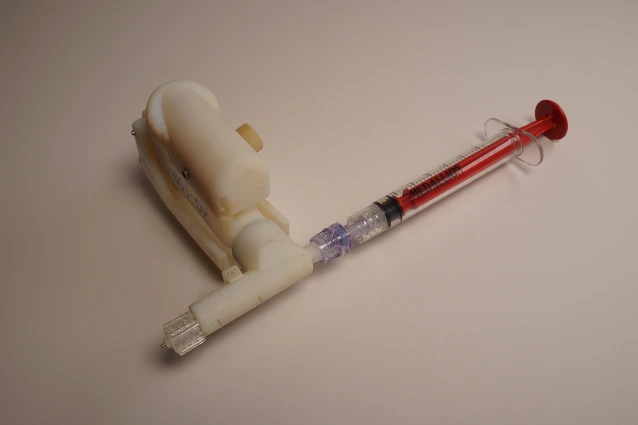
Twisting-Cup Plunger
Small 'cup' of microspheres moved from beneath the hopper, deposited into a separate flowpath
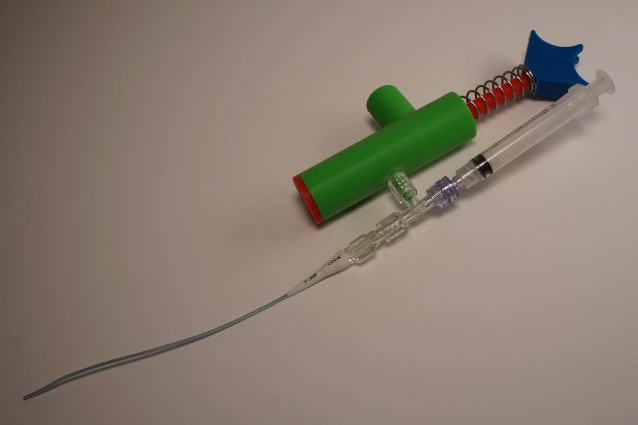
Additional Developments
Altered components to reduce maximum delivery quantity, replaced expensive plunger seal.
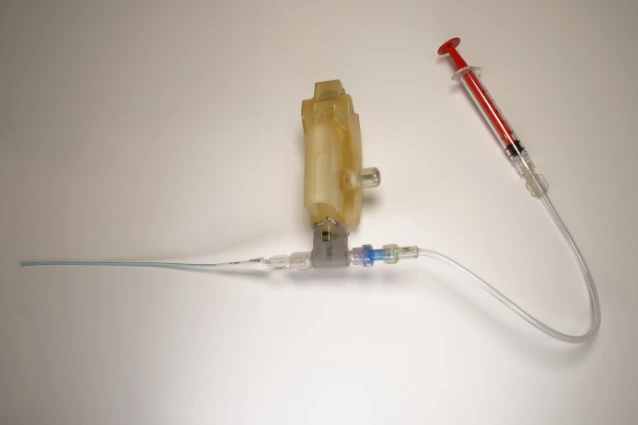
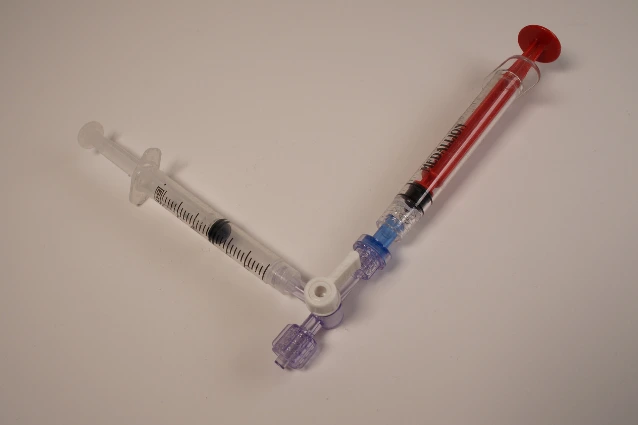
Minimal Viable Product
Void inside stopcock determines the maximum delivery quantity in a single action. Multiple actions, up to a limit, multiply that quantity
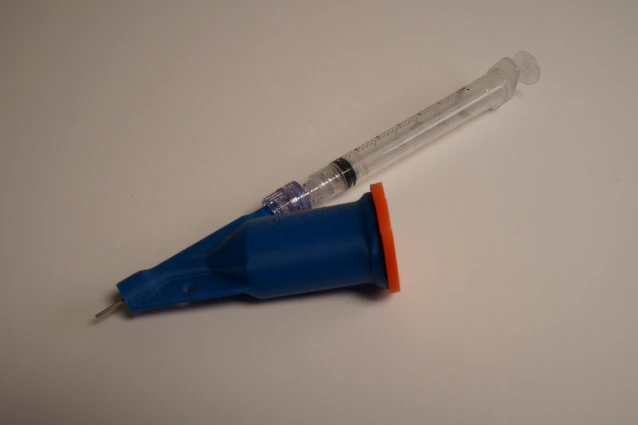
“Salt-Shaker” Concept
AccuSalt salt-shaker principle uses a funnel-topped reservoir that fills a small void when inverted.
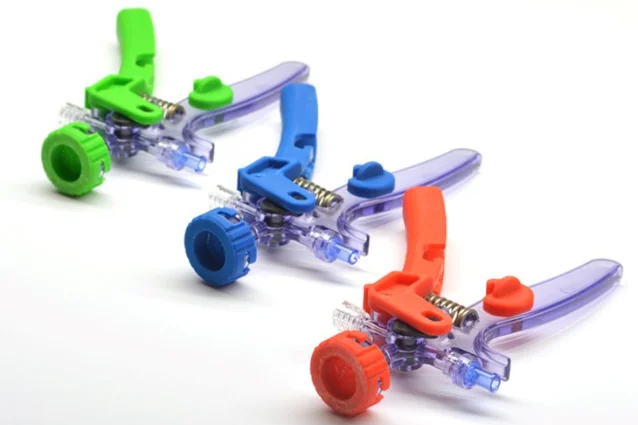
Final Moulded Device
Based upon the principles from the machined functional prototype with optimum void volume selected by testing physician.
Solving the Challenge
The Solution
Enginuity’s work occurred in two phases.
Phase 1: Improve the Existing Device
The initial focus was helping ABK reach animal trials by:
- Selecting more suitable materials that could withstand gamma sterilization.
- Improving the product reliability of hinges, joints, and connections.
- Simplifying aspects of the delivery mechanism.
This allowed ABK to successfully deliver microspheres into animal models and demonstrate that the particles were visible under X-ray imaging.
Phase 2: Redesign the Delivery Mechanism
The second challenge was preventing catheter blockage.
The original design used a complex pulsing mechanism and valve system. The redesigned solution introduced a much simpler metering concept:
- A large reservoir held the microspheres.
- A small internal chamber collected a controlled quantity of particles.
- The chamber rotated into the fluid flow path and released only a measured amount into the catheter.
An analogy used was a commercial salt dispenser: the main reservoir remains full, but only a small, measured volume is dispensed at a time. This reduced the likelihood of oversized particle groups entering the catheter simultaneously and causing blockages.
Summarizing the Outcome
The Conclusion
The project helped ABK overcome a critical development barrier by providing a reliable method for delivering and testing their novel radio-opaque embolic microspheres. Although the company’s commercial focus later shifted toward radiotherapeutic microspheres, the work enabled important proof-of-concept studies and demonstrated the value of thoughtful engineering, material selection, and iterative product development in medical device innovation.
Key Takeaways

Concept Refinement/Development
Device Compliance Awareness