FIVAFlow: Evolving from MVP to Global Medical Product

INDUSTRY:
Medical
TYPE OF WORK:
Product Design, Development, and Prototyping
About the Client
FivaMed Inc.
FIVAMed is a Medtech company built around FIVA: a “Fluid Intravenous Alert” concept and device platform, founded by Canadian anesthesiologist, Dr. Orlando Hung.
The Halifax-based medical device company developed FIVAFlow, a compact, clip-on IV monitoring device that measures flow, detects empty bags, and alarms clinicians before problems arise. Designed to work with standard gravity sets, FIVAFlow serves resource-constrained health systems and supports partnerships for affordable, locally manufactured IV safety solutions, including initiatives in developing nations.
Understanding the Problem
The Challenge
Like all anesthesiologists, Dr. Orlando Hong has a lot of responsibility. After years working in operating rooms, Dr. Hung identified a critical patient safety gap – too many IV bags were going dry. After conducting a double-blind study, it was concluded that more than 30% of gravity-fed IV bags were running dry without clinicians noticing. Because anesthesiologists focus on monitors at the head of the bed while IV bags hang above and behind them, they often relied on nurses to point out dry bags, adding procedural complexity and danger.
Dr. Hung set out on a mission to remedy the issue.
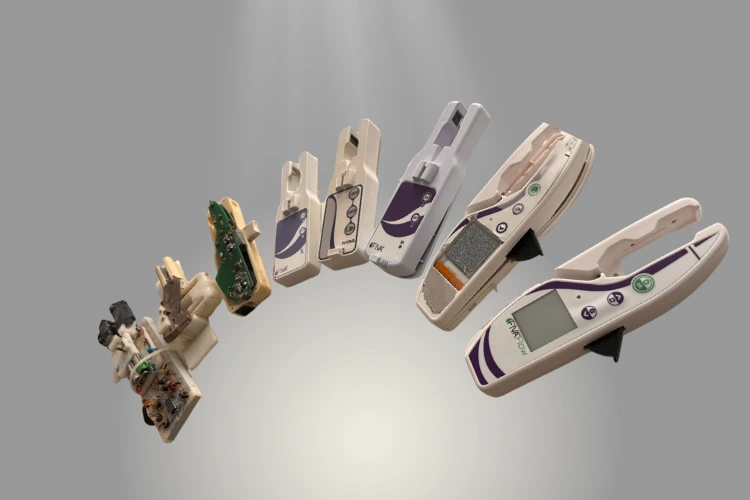
FIVAFlow Device Evolution: From MVP to Final Product
A progression of iterative prototypes showcasing improvements in sensing, usability, and global hardware compatibility.
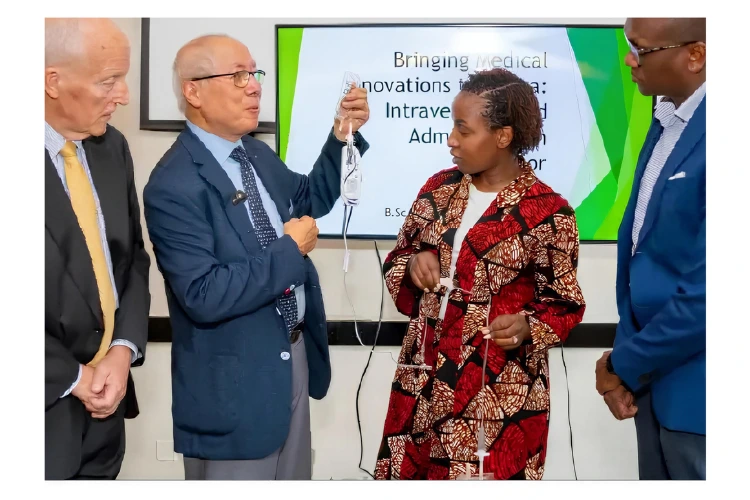
FIVAmed and Gearbox Target Healthcare Gaps with New Low-Cost IV Device in Kenya
A locally manufacturable solution improving IV monitoring in low-resource healthcare environments.
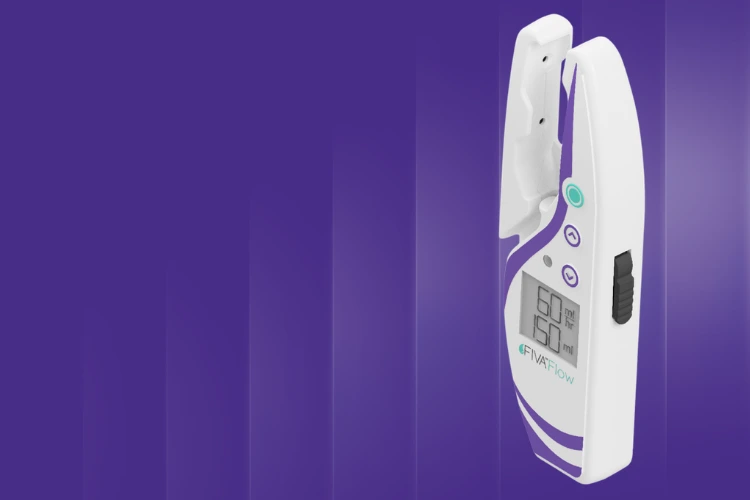
FIVAFlow Final Production Device
A fully validated IV monitoring system designed for reliable use in clinical environments and low-resource healthcare settings.
Solving the Challenge
The Solution
Dr Hung and the Enginuity Product Development team developed a solution, evolving multiple iterations from an MVP (minimum viable product) into a more robust, market-aligned device. Our team has worked through multiple product design iterations, and also provided end-to-end prototyping solution for this medical product.
First MVP:
A rugged, battery-powered device with one sensor that detected when the fluid level in the drip chamber dropped below a threshold, then pinched the IV line and sounded an alarm to prevent backflow or air. This version achieved the original safety goal but did not provide enough perceived value to justify setup and battery management effort for many users.
Second iteration:
The team added a second sensor and flow-counting capability, plus a display and user interface to show infusion rates. They redesigned the clamp mechanism to be more compliant and fit a much wider range of drip chambers sourced from multiple regions (North America, Europe, Mexico, China, etc.), achieving compatibility with roughly 95% of chambers in the field.
This required close collaboration between the mechanical, electronics, and firmware teams to refine sensor positioning, improve chamber fitment, calibrate flow detection logic, and ensure reliable performance across varying IV set designs.
Market repositioning:
Recognizing that North American and European hospitals were largely using infusion pumps, with their own economic and workflow dynamics, FIVEMed focused on markets where gravity-fed infusions remain prevalent and budgets for pumps are limited, particularly in Africa and parts of Southeast Asia. In these settings, Fiva filled the niche by providing reliable flow information and dry-bag alerts without the cost and complexity of full infusion pumps.
Throughout this evolution, Hung and Enginuity learned to broaden user input and systematically test in different clinical contexts and to treat firmware decisions as strategic commitments.
Summarizing the Outcome
The Conclusion
This case illustrates how a seemingly simple safety idea becomes complex the moment it enters the regulated, global reality of MedTech. FIVAmed’s journey from a very lean MVP to a globally compatible, software‑enabled device shows that regulatory drag and international variability are not edge issues; they are core design constraints.
FIVAFlow evolved from a lean MVP into a more robust, globally compatible medical device through multiple iterations spanning firmware development, PCB and electronics design, sensor integration, mechanical redesign, and manufacturability refinement.
The project also highlighted the importance of designing for international hardware variability, long-term regulatory considerations, and scalable production from the early stages of development.
Key Takeaways

Strategic Firmware Governance
Treat every firmware tweak as costly, regulated change; prioritise impact.
Global-Ready Hardware