INDUSTRIAL DESIGN SERVICES
Industrial Design for Manufacturable Products
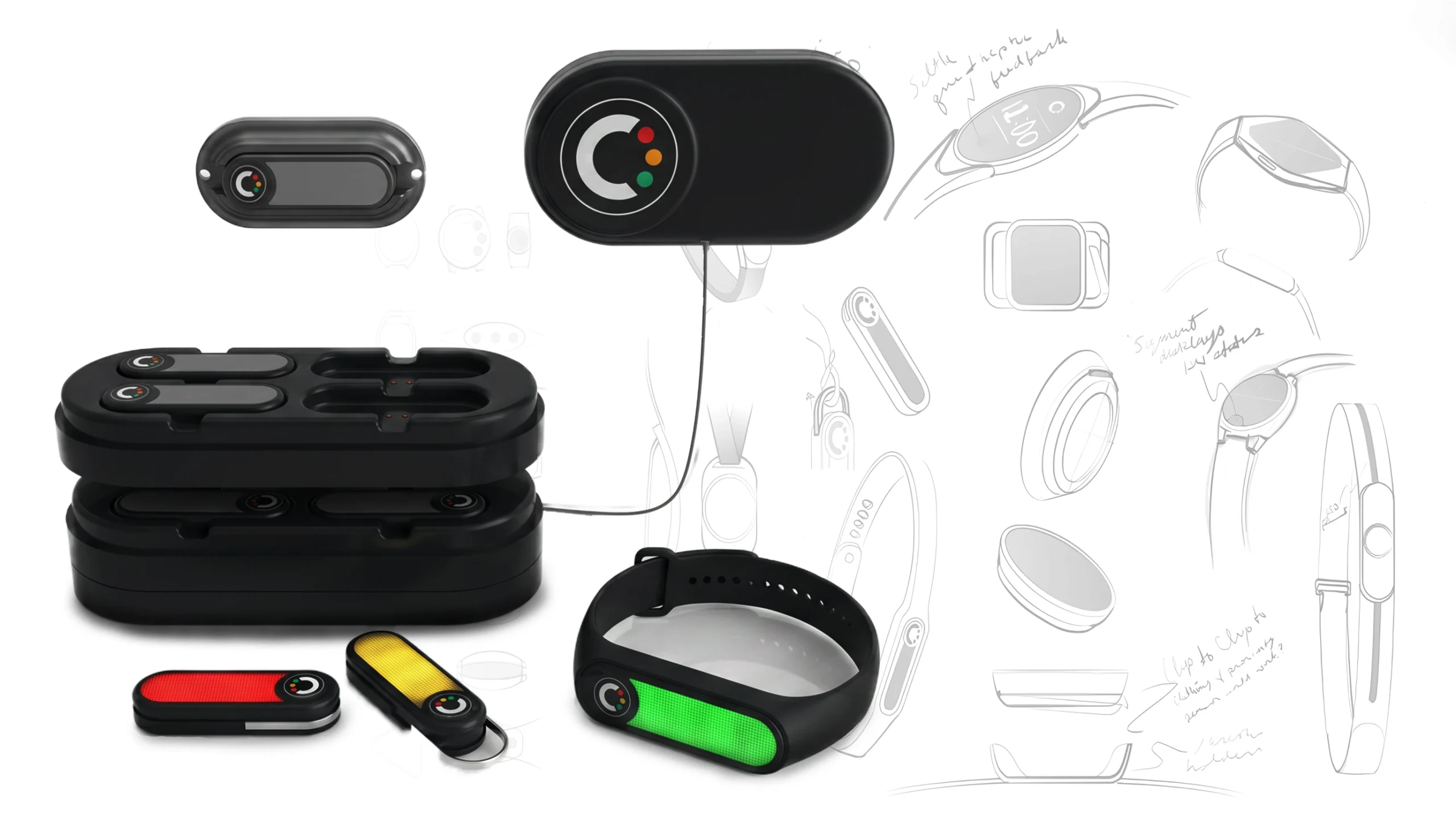
Industrial Design for Startups and Enterprises
01
Ideation and concept development
02
User-driven, market-informed design
03
Design and brand integration
04
Complex modelling and digital rendering
05
Mockup and prototype
Physical and digital prototypes that validate form, function, and usability before production
06
Design for manufacture
Industrial Designs We have Brought to Life.
Our Industrial Design Process
Good industrial design is a sequence of decisions, each one shaping the next. Enginuity moves from understanding how a product gets used, through form, ergonomics, and materials, to a design that’s ready to manufacture.
Industrial Design Depth Across Industries
Case Studies Across Medical, Consumer, Industrial, Marine, and Regulated Hardware
FIVAFlow: Evolving from MVP to Global Medical Product
The Halifax-based medical device company developed FIVAFlow, a compact, clip-on IV monitoring device that measures flow, detects empty bags, and alarms clinicians before problems arise.
Scaling Up FreshrPack from Lab to Pilot Production
How Enginuity helped Freshr Technologies transform a lab-scale microgel packaging process into a budget-ready, continuous roll-to-roll pilot line for fresh protein.
Remote Product Development Revolutionizes Electronic Gaming Tables
The success of the Jackpot Digital project highlights our proficiency in delivering innovative product development, engineering design outsourcing, and quick prototyping services that can be applied across various industries.
Frequently Asked Questions
What is industrial design?
Industrial design is the discipline that shapes a physical product's form, ergonomics, materials, and user interaction so it works in the real world and can be manufactured at volume. At Enginuity, industrial design runs in parallel with mechanical and electronics engineering from the first concept, so a product's appearance, the way it feels in the hand, and the way it gets built are decided together.
We have 25+ years of industrial design experience designing hardware ranging from consumer products and medical devices, to regulated marine, defence, and industrial equipment.
What is industrial UX, and how is it different from regular UX design?
Industrial UX designs the interface on physical equipment, such as machine HMIs, instrument touchscreens, and control panels, where the screen has to match how the hardware behaves. Enginuity designs industrial UX alongside the firmware and control systems, so the interface and the device work as one system.
Is industrial design just about how a product looks?
Looks are only part of it. Industrial design at Enginuity decides form, ergonomics, material, and assembly logic together, so every aesthetic choice is also a manufacturing, durability, and cost decision. A handle's curve affects grip, mold complexity, part count, and unit price all at once, which is why Enginuity treats appearance and engineering as one problem.
What is the difference between industrial design and product design?
Industrial design and product design overlap, but they scope differently. Industrial design focuses on the physical product itself: its form, ergonomics, material and finish choices, how it feels in the hand, and how it gets manufactured at volume. It's the discipline that decides what a product looks like, how it's held and operated, and whether the shape can actually be made by the chosen production process.
Product design is the broader term. It often covers the full definition of a product including digital interfaces, software and UX, service design, and the overall user journey, not just the physical object. In hardware, the practical distinction is this: industrial design shapes the manufactured thing you hold, while product design can describe everything from the screen experience to the business case around it.
Does industrial design change based on the material a product is built from?
Yes. Material drives nearly every design decision: injection-molded plastic needs different wall thicknesses, draft angles, and ribbing than sheet metal, die-cast aluminum, or CNC-machined parts. Enginuity selects material and manufacturing method together, because the form has to suit how the material behaves in production.
What certifications and standards does an industrial design need to meet?
It depends on the product and market. Consumer electronics often need CSA, UL, CE, and FCC or IC for emissions, while marine, defense, and industrial products add IP ingress ratings, environmental sealing, and sector-specific standards. Enginuity designs to the certifications a product must hold from the start, so a design choice does not trigger a failure or costly recertification later. Common standards by market:
Electronics
- FCC Part 15
- PTCRB
Marine and offshore
- ABS (American Bureau of Shipping)
- DNV (Det Norske Veritas)
- Lloyd's Register
- API 2A-WSD (offshore platform design)
- ASME B31.3 (process piping)
Safety and automation
- CSA Z434 (industrial robot safety)
- CSA Z432 (machine safeguarding)
- IEC 61508 (functional safety of electrical and electronic systems)
- ISO 13849 (safety of machinery)
Military and defense (MIL-SPEC)
- MIL-STD-810 (environmental engineering)
- MIL-STD-882 (system safety)
- MIL-STD-461 (electromagnetic interference control)
- MIL-STD-1472 (human factors engineering)
- MIL-S-901D (shipboard shock testing)
- MIL-STD-167-1A (mechanical vibrations)
- MIL-DTL-31000 (technical data packages)
If you are not sure which standards apply to your project, reach out to our team and we will map the requirements as part of the initial discovery.
Which material compliance standards should I plan for early?
It depends on the product, but the common ones to flag at the design stage are RoHS for restricted substances in electronics, flammability ratings for enclosures and consumer goods, and biocompatibility for any product that contacts skin or the body, which matters heavily for medical and wearable devices. Enginuity designs to these from the start, since material and finish choices are hard to reverse once tooling exists.
What should a first-time entrepreneur consider before starting industrial design?
Confirm three things first: the product's core function, your target manufacturing volume, and a rough price ceiling, because each one constrains the design. Enginuity recommends defining the manufacturing intent early, since a product made by injection molding is designed very differently from one made by sheet metal or CNC.
Does Enginuity offer industrial design prototyping?
Yes. Industrial design prototyping turns a concept into a physical model you can hold, test, and put in front of users or investors before committing to tooling. Enginuity builds appearance and functional prototypes to validate form, fit, and ergonomics, then carries the proven design into engineering and production. Learn more about Enginuity's prototyping services.
What does an industrial design engagement with Enginuity deliver?
A typical engagement delivers concept sketches, refined CAD models, ergonomic and human-factors analysis, material and finish specifications, and appearance prototypes, handed off ready for mechanical engineering and manufacturing. Deliverables are scoped per project, so you pay for the depth your product needs rather than a fixed package.
How do you help with supply chain and manufacturing?
Enginuity carries industrial design through to manufacturing support, including DFM, material and process selection, tooling oversight, and manufacturer selection. The design is validated against real supply chain and production constraints before any tooling is committed.
What does industrial design cost, and what else should I budget for?
The design fee depends on product complexity, how many concept directions you explore, and the depth of prototyping. As a rough guide, a focused single-product industrial design engagement often runs from around $10,000 to $60,000, while complex multi-component or regulated products run higher.
Beyond the design itself, plan for three adjacent costs that catch first-time builders off guard: physical prototyping and iterations, production tooling, and certification testing such as CSA, UL, or EMC. Enginuity scopes the full picture after a discovery conversation about function, volume, and timeline, so the budget reflects the real path to production.
How long does an industrial design project take?
It depends on how many concept and prototype rounds the product needs and whether the design feeds straight into engineering and tooling. As a rough guide, concept exploration runs about 2 to 6 weeks, a first working prototype 8 to 16 weeks, and the full path through engineering to a production-ready handoff 12 to 24 weeks for more complex products. We work with you to set the schedule against your launch or funding milestones.