PRODUCT DEVELOPMENT SERVICES
Engineering from Idea to Manufacturing
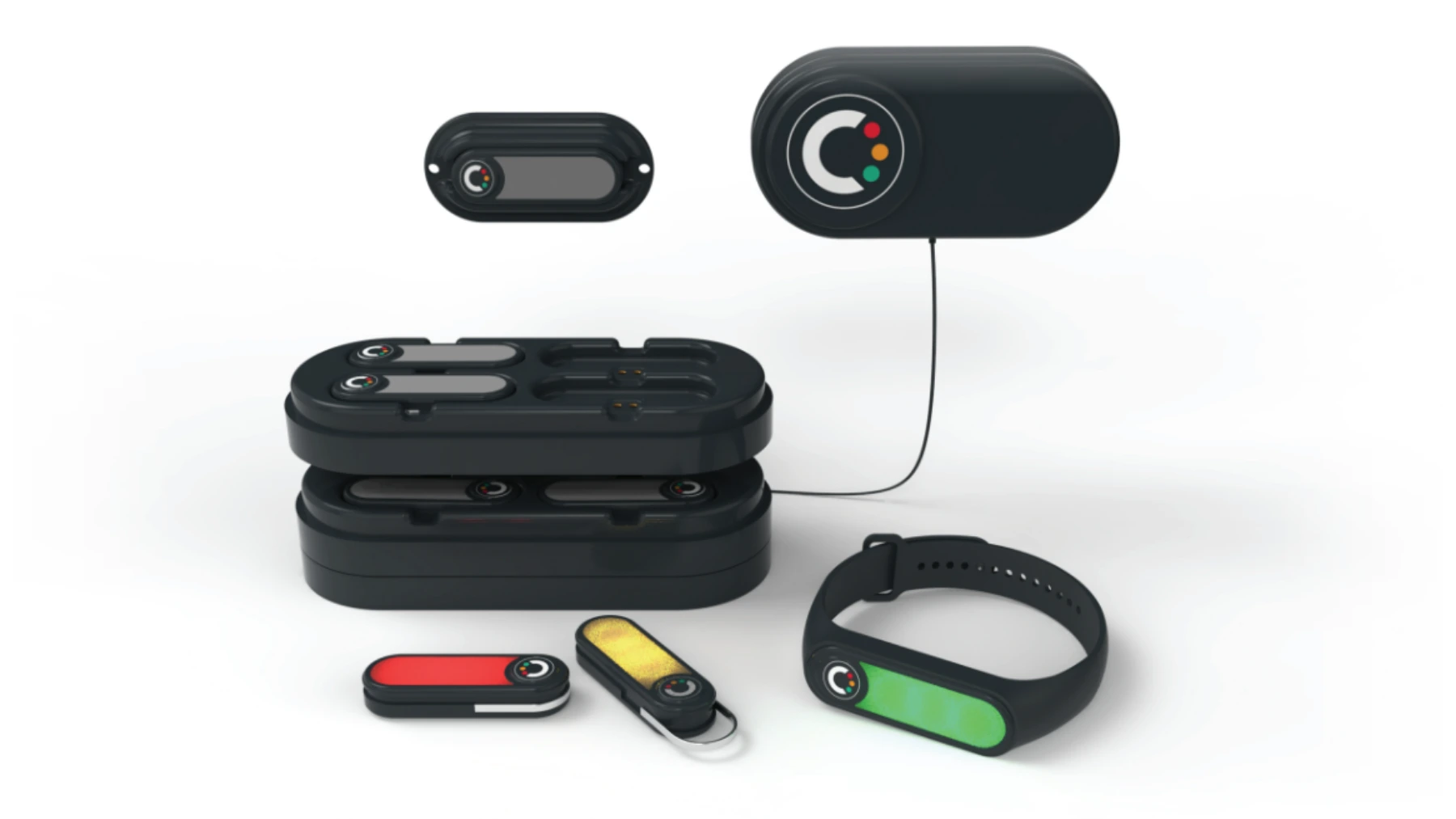
Full Service Product Development at Any Stage
Last year, we supported 20+ startups and 30+ industrial product developments across North America and Europe.
Building the Next Generation of Consumer and Industrial Products
Solving Product Development Challenges Across Industries
Building hardware is complex. Our experience will help you navigate with confidence and turn ideas into production-ready products.
Product Development Capabilities
Product Design
We design products that balance usability, function, and manufacturability with form and purpose aligned from day one.
Product Prototyping
We build and test functional prototypes using 3D printing, CNC, and fabrication to validate design, fit, and usability early.
Mechanical Design
Electronics Design
Industrial Design
Manufacturing Support
Key Clients




Rhodri Armour, PhD, P.Eng.
Program Manager, Engineering Design and Discovery
Rhodri provides the expert technical oversight needed to ensure your product maintains timeline and budget. He has taken opaque ideas and confidently turned out MVPs (minimum viable product) that are ready for the next stage of development.
At any point in your product’s development, Rhodri will navigate you through the often complex path of ideation to production.
His expertise has catapulted developments in life science, food and nutrition, renewable energy, carbon sequestration and wearable tech. And that’s just the tip of the iceberg.
Fun fact about Rhodri: He is a mechanical engineer with a PhD in biomimicry. (Ask him about his doctorate thesis – you won’t regret it.)
Case Studies Across Medical, Consumer, Industrial, Marine, and Regulated Hardware
FIVAFlow: Evolving from MVP to Global Medical Product
The Halifax-based medical device company developed FIVAFlow, a compact, clip-on IV monitoring device that measures flow, detects empty bags, and alarms clinicians before problems arise.
Scaling Up FreshrPack from Lab to Pilot Production
How Enginuity helped Freshr Technologies transform a lab-scale microgel packaging process into a budget-ready, continuous roll-to-roll pilot line for fresh protein.
Remote Product Development Revolutionizes Electronic Gaming Tables
The success of the Jackpot Digital project highlights our proficiency in delivering innovative product development, engineering design outsourcing, and quick prototyping services that can be applied across various industries.
Frequently Asked Questions
What is product development?
Product development is the end-to-end process of turning an idea into a functional, manufacturable, and scalable product. At Enginuity, product development covers research, concept development, industrial design, mechanical and electronics engineering, prototyping, compliance, and manufacturing handoff.
When the project is a new hardware or consumer product, the work starts well before any CAD file opens. Enginuity engineers begin with the need behind the product (who it is for, what use case it serves, where existing solutions fall short), then move into feasibility study, market intelligence, concept development, roadmap strategy, and vendor and technology evaluation. That early-stage work is what our engineering consulting team does day in and day out.
What is the difference between product design, product development, and prototyping?
Product design, product development, and prototyping are three stages of the same journey, often confused but they are not interchangeable terms. Product design defines form, function, and user experience. Product development is the full lifecycle: research, design, engineering, testing, and manufacturing readiness. Product prototyping is the proof stage inside development, where physical or digital models validate that the design actually works before tooling is committed. At Enginuity, all three happen under one roof.
What makes Enginuity different from other product development engineering companies?
Enginuity is a Canadian engineering firm with deep roots in the industries that have defined the region for generations: marine, aerospace, defense, medical, manufacturing, and consumer product development. This industry exposure shapes how we engineer, what standards we engineer to, and the kind of problems we are most often called to solve.
Inside one team, we cover mechanical, electronics, industrial design, automation and robotics, manufacturing, and safety engineering. This cross-disciplinary depth is what lets us take on the work most product development firms are not built for: obsolescence redesigns where the original components are no longer sourceable, custom consumer products with no off-the-shelf reference design, and custom industrial products built for processes that no standard equipment catalogue addresses.
Can Enginuity run engineering due diligence on a technology or product I am evaluating?
Yes. Engineering due diligence at Enginuity is an independent technical assessment of a product, a piece of technology, or an engineering challenge, designed to tell you what is real, what is risky, and what it will cost to get ship-ready. A typical engagement covers technical feasibility, manufacturability, IP position, supply chain dependencies, regulatory exposure, and the gap between the current build state and what production at scale actually requires.
The work is usually commissioned by investors before a funding round, acquirers before a deal closes, licensees before signing, or operating companies before committing budget to a new internal program. You can read an example of our technical due diligence work with Tenera Care for an example of how actual engagement runs.
Can Enginuity validate a startup's technology before investors commit capital?
Yes. Enginuity has worked directly with VCs and acquirers to stress-test early-stage hardware before funding decisions close. The output is an engineering-backed view of what the technology actually is, what it will cost to productize, and where the founder's claims hold up or break. Whether the goal is to de-risk a hardware bet, verify go-to-market readiness, or sanity-check a technical founder, our team can definitely help.
What is your process for designing physical consumer products?
Enginuity designs physical consumer products by working from the end-user outward. We start with user need and use-case definition, then move into industrial design for form, ergonomics, and brand fit. From there our mechanical design team works on structure, materials, and manufacturability, and electronics design gets involved whenever the product has a connected or powered element.
We will also help you navigate compliance and certification testing alongside the design work. You can learn more about our 7 step engineering discovery process.
Has Enginuity worked on consumer medical product development?
Yes. Enginuity has developed consumer and medical products for a wide range of companies, including Fiva Med, Tenera, ABK Biomedical, and many others. Medical product development comes with unique challenges. Products must deliver a strong user experience while also meeting strict regulatory, safety, and biocompatibility requirements. Our team designs with those constraints in mind from the beginning.
We apply human factors thinking to improve usability, select materials that align with medical-grade requirements, and maintain the engineering documentation needed to support certification and regulatory processes. For highly regulated projects, we collaborate with specialized regional regulatory partners while leading the product engineering and design effort.
Do you develop products for industrial automation and manufacturing environments?
Yes. Industrial automation is one of the areas where Enginuity does its deepest work. And, most of it falls under custom product development rather than off-the-shelf integration. The capability spans custom machine design, robotics integration, machine vision, SCADA and HMI development, and PLC automation for production lines and full plants.
Clients typically engage us when they need equipment purpose-built for a unique process or when production systems require modernization through new controls, sensors, or autonomous functionality. We support projects from concept through commissioning, including FAT, SAT, and connectivity with existing operational technology (OT) and information technology (IT) infrastructure.
Can Enginuity take a product from prototype to mass production?
Does your product engineering service cover the full path from idea to manufacturing?
Yes. Enginuity covers the full lifecycle, from research and discovery through to manufacturing handoff, across both consumer hardware and industrial systems. Inside one team we cover research and discovery, industrial design,mechanical engineering, electronics engineering, embedded software and firmware, product prototyping, compliance and safety engineering, and manufacturing support, all working closely together to turn your idea into a real product.
If your scope is narrower (a redesign with no new electronics, or a manufacturing-only handoff from an existing design), we can structure the engagement around just the phases you need.
How much does product development cost, from idea to manufacturing?
Product development cost at Enginuity depends on whether you are developing a consumer product or an industrial system, and on how complex the build is. Both follow a phased structure: the early phases are scoped upfront so you have a defensible number to commit to, and the later phases get sized once the early work has surfaced what the project actually needs.
Consumer product development
A consumer product engagement starts with two scoped early phases:
| Phase | Deliverables | Estimated cost (CAD) |
| Discovery | Proof-of-concept assessment, project plan, requirements, budget, timeline | $10,000 to $20,000 |
| Conceptual design | Evaluation of existing and new concepts against requirements; prototype and test the selected variant | $15,000 to $45,000 |
Later phases (preliminary design, detailed design, and supply chain definition) are case-specific because they depend on the complexity of the product, the manufacturing process it will use, and the supply chain it will rely on. A full consumer product program starts from $50K and scales up depending on complexity.
Industrial product development
An industrial system (custom machine, automation line, SCADA/HMI, or robotic integration) follows a different shape because the work has to fit a production environment that already exists. Early phases include:
| Phase | Deliverables | Estimated cost (CAD) |
| Discovery | Functional requirements, integration assessment with existing OT and IT systems, project plan and budget | $10,000 to $20,000 |
| Conceptual design | Control architecture, machine layout or process design, evaluation of off-the-shelf versus custom components | $15,000 to $45,000 |
Engineering, build, commissioning, FAT and SAT, and operator training are case-specific because they depend on the scale of the production environment, the level of integration involved, and the certifications required. Full industrial programs start from $100k and scale up depending on complexity.
Is prototyping done in-house at Enginuity?
Yes, prototyping at Enginuity happens in-house. We run 3D printing, CNC machining, and electronics prototyping (with our own PCB machine) in our own facility, which means we can put a working prototype into your hands quickly. This speed helps you gather user feedback sooner, validate the design under real-world conditions, and roll design changes back into the build without waiting on a vendor queue.
Does Enginuity build the software and firmware that goes with the hardware?
Yes. Enginuity's in-house team writes embedded software and firmware for connected devices, sensors, and control systems. We optimize for the constraints within industrial, medical, and consumer-grade hardware: memory footprint, power draw, real-time performance, and tight integration with the board it runs on.
Do you have experience designing products that scale? And what does that experience include?
Yes. Scalability has been part of how we design products at Enginuity for years, because retrofitting it into a finished design is consistently more expensive than building it in from the start. Designing for scale means designing the product the way it will actually be manufactured, sourced, and assembled at the volume the business needs, not just the way it will be prototyped.
In practice, the work covers four things:
- Part selection: Components are chosen for availability and lead time at production volume. Single-source parts get flagged early so alternatives can be designed before the schedule depends on them.
- Manufacturing-driven design: Mechanical assemblies are designed for the process they will actually use at volume (injection molding, sheet metal, CNC, casting, die casting), not just the process that produced the prototype. Geometry, tolerances, and material choices are made against the real production method.
- Electronics yield economics: PCB designs are built against the test and yield realities of high-volume assembly, with the panelization, test points, and component placement that production needs.
- Supply chain mapping: Long-lead parts, geographically concentrated suppliers, and unscalable vendors get surfaced during design, not after the first production order goes out.
We have applied this approach across consumer products, industrial automation systems, and custom hardware programs. Most of the time, the first conversation in discovery is about what volume the product needs to support at production, because everything in the design downstream of that conversation gets shaped by the answer.
Which industry standards and certifications can Enginuity engineer toward?
Enginuity engineers products to meet the standards their target industry demands. Our team works against regulatory and certification requirements from the start of design, not as a retrofit. The standards we have delivered against include:
Electronics
- FCC Part 15
- PTCRB
Marine and offshore
- ABS (American Bureau of Shipping)
- DNV (Det Norske Veritas)
- Lloyd's Register
- API 2A-WSD (offshore platform design)
- ASME B31.3 (process piping)
Safety and automation
- CSA Z434 (industrial robot safety)
- CSA Z432 (machine safeguarding)
- IEC 61508 (functional safety of electrical and electronic systems)
- ISO 13849 (safety of machinery)
Military and defense (MIL-SPEC)
- MIL-STD-810 (environmental engineering)
- MIL-STD-882 (system safety)
- MIL-STD-461 (electromagnetic interference control)
- MIL-STD-1472 (human factors engineering)
- MIL-S-901D (shipboard shock testing)
- MIL-STD-167-1A (mechanical vibrations)
- MIL-DTL-31000 (technical data packages)
If you are not sure which standards apply to your project,reach out to our team and we will map the requirements as part of the initial discovery.
Are there funding or grant opportunities you can help me access?
Enginuity serves as your bridge to essential funding and grant opportunities, facilitating connections with influential entities in the ecosystem. In previous years, we have connected entrepreneurs with the following companies in the ecosystem:
Regional Development and Innovation:
- Atlantic Canada Opportunities Agency (ACOA)
- Invest Nova Scotia
- New Brunswick Innovation Foundation (NBIF)
- Prairies Economic Development Canada (PrairiesCan)
Entrepreneurship and Business Support:
- Centre for Entrepreneurship Education and Development (CEED)
- The Pier
- Emera Idea Hub
- Ignite Atlantic
- Genesis Center
Educational Institutions and Research:
- Memorial University of Newfoundland (MUN)
- Nova Scotia Community College (NSCC)
- Dalhousie University (DAL)
- Springboard Atlantic Inc
Ocean and Marine Focus:
- Centre for Ocean Ventures and Entrepreneurship (COVE)
- Ocean Technology Council of Nova Scotia (OTCNS)
- Institute for Ocean Research Enterprise
- Marine Renewable Canada
Technology and Innovation Support:
- Digital Nova Scotia
- LearnSphere
- The National Research Council of Canada Industrial Research Assistance Program (NRC IRAP)
Universities and Research:
International Focus:
Programs and Incentives:
- ACOA Atlantic Innovation Fund
- Atlantic Fisheries Fund
- Atlantic Immigration Program
- Canada Media Fund
- Canada’s Ocean Supercluster
- Canadian Technology Accelerators
- Co-op Education Incentive
- Digital Animation Tax Credit
- Digital Media Tax Credit
- Graduate to Opportunity Hiring Incentive
- Immigration – Express Entry
- Immigration – Skilled Worker Visa Stream
- Innovate to Opportunity Hiring Incentive
- ISED Strategic Innovation Fund
- Nova Scotia Capital Investment Tax Credit
- Nova Scotia Innovation Equity Tax Credit
- Nova Scotia Nominee Program Immigration Streams
- Nova Scotia Research and Development (R&D) Tax Credit
- NRC Industrial Research Assistance Program (IRAP)
- Perennia Fisheries Programs
- Scientific Research and Experimental Development (SR&ED) Tax Incentive Program
- Scotians Global Advisors Program
- Small Business ACCESS-Ability Grant Program
- Think Export Information Sessions
- Workplace Innovation and Productivity Skills Incentive (WIPSI)
Partners:
- Agriculture and Agri-food Canada
- Bedford Institute of Oceanography
- Black Business Initiative
- Business Development Bank of Canada
- Business Navigation Services, Nova Scotia Office of Regulatory Affairs & Service Effectiveness
- Buy Local NS
- Canadian Alliance for Skills and Training in Life Sciences (CASTL)
- Canadian Food Inspection Agency
- Canadian Space Agency
- Cape Breton Partnership
- Community Business Development Corporations
- Connect 2 Canada
- COVE
- Creative Destruction Lab
- Defence Research and Development Canada Atlantic
- Discover Halifax
- EduNova – Study in Nova Scotia
- Export Development Canada
- Fisheries and Oceans Canada
- Global Affairs Canada
- Halifax International Airport Authority
- Halifax Partnership
- Ignite Atlantic
- Immigration and Citizenship – Government of Canada
- Innovation Science & Economic Development Canada
- Invest in Canada
- IWK Health Centre
- National Research Council
- Nova Scotia Department of Agriculture
- Nova Scotia Department of Communities, Culture & Heritage
- Nova Scotia Department of Economic Development
- Nova Scotia Department of Fisheries & Aquaculture
- Nova Scotia Department of Intergovernmental Affairs
- Nova Scotia Department of Labour & Advanced Education
- Nova Scotia Department of Municipal Affairs
- Nova Scotia Department of Natural Resources
- Nova Scotia Finance and Treasury Board
- Nova Scotia Health
- Nova Scotia Immigration
- Nova Scotia Online Services for Business
- Perennia
- Screen Nova Scotia
- Service Nova Scotia
- Taste of Nova Scotia
- The Canadian Trade Commissioner Service
- The Verschuren Centre
- Tourism Nova Scotia
- Volta
Do you sign NDAs before discussing my project?
Can you help with patent searches?
Patent searches sit at the intersection of legal and engineering work. The legal piece (filing, prior art searches that hold up in prosecution, and freedom-to-operate opinions) belongs with a patent attorney. The engineering piece (assessing whether existing patents actually describe the same technology, identifying design-around opportunities, and supporting IP strategy with technical depth) is work Enginuity does in support of your legal team. We have run this kind of analysis for clients filing fresh patents, defending existing ones, and evaluating IP positions inside a due diligence engagement.
Do I need a prototype before filing a patent?
No, a prototype is not required to file a patent application. The patent system runs on documented inventions, not working hardware, and many applications get filed on the strength of drawings and written claims alone.
That said, building a prototype before you file is usually the smarter move. A working prototype confirms the invention functions the way you have claimed, surfaces design changes that should be in the claims before they get locked in, and gives investors, partners, and licensees something tangible to assess. A paper patent and a patent backed by working hardware get treated very differently in funding conversations.
Enginuity builds prototypes designed to support patent claims and hold up to investor scrutiny. If you are working toward a filing, our product prototyping team can help you get a working unit in hand before the application gets drafted.
Do you work with patent lawyers?
Yes. Enginuity does not provide legal advice or file patents directly, but we regularly work alongside patent attorneys on the engineering side of the IP process. This includes producing the technical documentation, drawings, and claim-support material that patent applications require, helping attorneys translate engineering concepts into patent language, and providing technical analysis when a case calls for it.
If you do not already have a patent attorney, we will connect you with trusted firms we have worked with before.